The Best Pillow for Side Sleepers: A Guide to Pain-Free Sleep
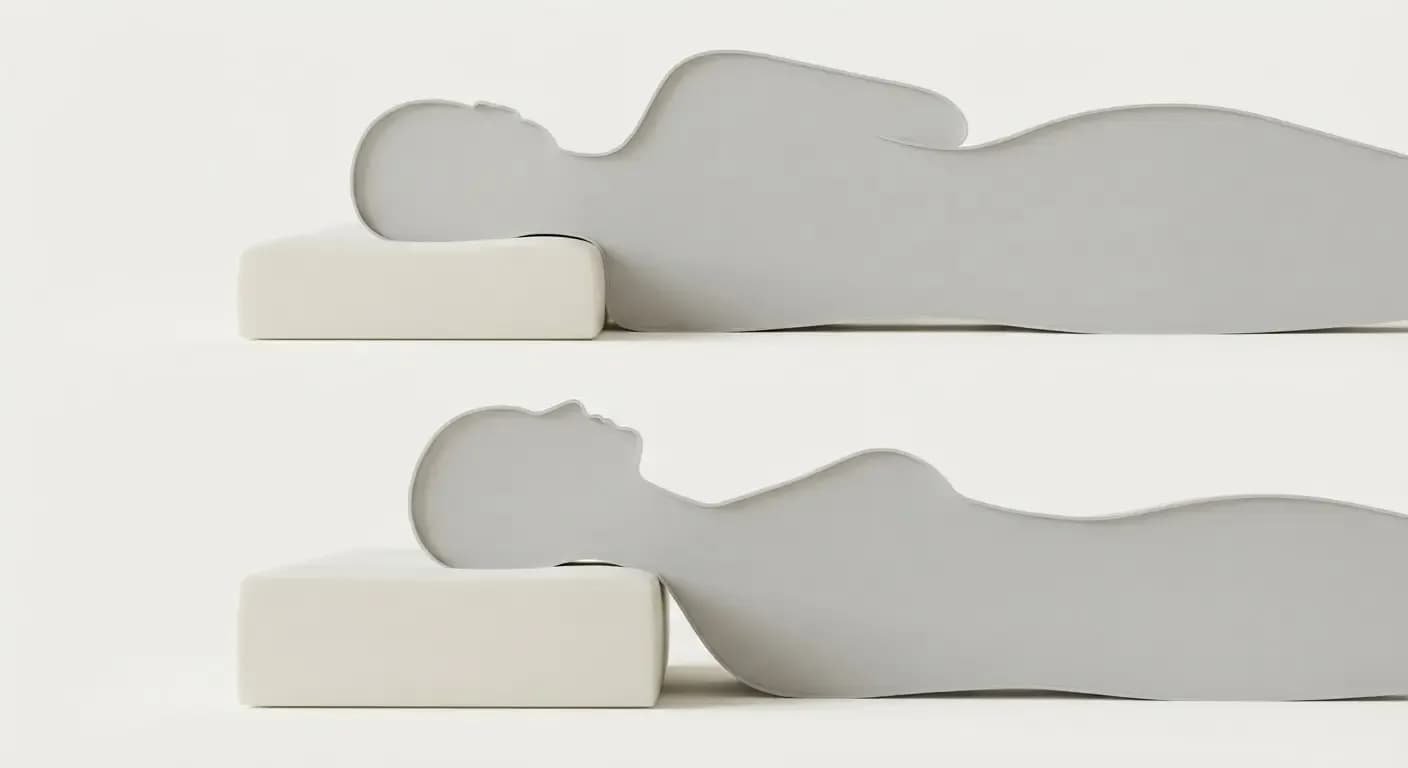
Waking up with a stiff neck or sore shoulders is a pretty clear sign that your pillow isn't doing its job. For those of us who sleep on our sides, the wrong pillow doesn't just lead to a bad night—it can ruin the whole next day. If you're tired of starting your mornings with aches and pains, you're in the right place.
"For a side sleeper, the right pillow isn't just about comfort—it's about keeping your spine perfectly straight all night long."
Why Your Pillow Is the Key to Waking Up Pain-Free
When you sleep on your side, a gap forms between your head and the mattress. The entire purpose of your pillow is to fill that space perfectly, supporting your head and neck so your spine stays in a neutral, straight line. If the pillow is too high or too low, it forces your neck into an unnatural angle, leading to strain, shoulder pressure, and that all-too-familiar morning stiffness.
So, how do you find the right one? It all comes down to a few key factors. We'll be looking at pillows through the lens of four main criteria to help you choose:
- Loft: This is simply the height or thickness of the pillow.
- Firmness: How much the pillow gives under the weight of your head.
- Material: What the pillow is made of, which affects feel, support, and temperature.
- Adjustability: Whether you can change the pillow's loft and feel yourself.
Understanding these elements is the first step toward finding your perfect match and enjoying pain-free sleep.
Top Pillow Types for Side Sleepers: A Quick Comparison
Navigating the world of pillows can be confusing. To simplify things, here is a quick breakdown of the most common and effective types for side sleepers.
Pillow Type — Best For — Material — Adjustability
Adjustable Shredded Memory Foam — Overall comfort and pain relief — Shredded Memory Foam — High (removable fill)
Latex — Hot sleepers and responsiveness — Natural or Synthetic Latex — Low (usually a solid block)
Solid Memory Foam — Consistent, firm support — Solid Memory Foam Block — None
Let's dive deeper into what makes each of these options unique.
Adjustable Memory Foam Pillows – Best Overall
An adjustable pillow filled with shredded memory foam is often the top choice for side sleepers, and for good reason. These pillows allow you to add or remove the filling to get the height just right for your body. The shredded foam molds perfectly to the curve of your neck and head, providing excellent pressure relief.
- Pros: The ability to customize the loft is a huge plus, as it fits nearly any body type. They offer a great balance of soft comfort and firm support.
- Cons: Some memory foam can have a slight smell when new (called off-gassing), though this usually fades quickly. They can also sometimes retain heat more than other materials.
This type of pillow is perfect for the vast majority of side sleepers, especially those who struggle with neck, shoulder, or back pain and haven't found a 'one-size-fits-all' pillow that works for them.
Latex Pillows – Best for Hot Sleepers
If you often wake up feeling too warm, a latex pillow might be your best friend. Latex is a natural material derived from rubber trees and is known for its breathability. It has an open-cell structure that allows air to circulate freely, keeping you cool all night.
- Pros: They are incredibly durable, hypoallergenic, and offer excellent airflow. They have a more responsive, bouncy feel than memory foam.
- Cons: Latex pillows are typically heavier and don't offer the same deep contouring as memory foam. They can also be on the more expensive side.
This pillow is ideal for side sleepers who prioritize a cool sleep surface and prefer a bouncier, more responsive feel over the slow-sinking sensation of memory foam.
Solid Memory Foam Pillows – Best for Consistent Support
A solid memory foam pillow, often with an ergonomic contour shape, offers unwavering and predictable support. Unlike a shredded fill pillow, a solid one maintains its shape night after night. The contoured design usually features a curve that is meant to cradle your neck and support your head properly.
- Pros: They provide excellent shape retention and are often designed specifically with orthopedic support in mind. You never need to fluff or adjust them.
- Cons: The lack of adjustability is a major drawback; if the height isn't right for you, there's nothing you can do. They can also trap heat and some people find the firmness to be too much.
This pillow is best for side sleepers who know their exact loft and firmness preference and want a pillow that feels the exact same every single night.
Buyer's Guide: How to Choose the Perfect Pillow for Side Sleeping
Feeling empowered to make your own choice is important. Here’s a detailed guide to the features that matter most when you're on the hunt for the perfect side-sleeper pillow.
Pillow Loft & Firmness Explained
Loft (height) is the single most important factor for a side sleeper. You need a pillow that is high enough to fill the space between your ear and the edge of your shoulder. As a general rule, people with broader shoulders need a higher loft pillow. For firmness, most side sleepers do best with a medium-firm to firm pillow. It needs to be strong enough to hold your head up and prevent it from sinking too low.
Decoding Pillow Materials (Foam vs. Latex vs. Down)
We've covered foam and latex, but what about others? Down and feather pillows are very soft and malleable, but they often lack the support side sleepers need and can compress too much overnight, causing your neck to bend. Memory foam offers superior contouring and pressure relief, while latex provides a cooler, bouncier support. The choice really comes down to personal preference for feel and temperature.
Why Adjustability is a Game-Changer for Side Sleepers
No two people are built the same, so why should their pillows be? An adjustable pillow allows you to fine-tune the loft to match your unique shoulder width and head size. This takes the guesswork out of finding the right height and is a major reason why adjustable pillows have become so popular. You can create a pillow that is truly customized for you.
The Critical Link Between Your Mattress and Your Pillow
Many people don't realize this, but your mattress has a huge impact on what pillow you need. If you have a very soft mattress, your body will sink into it more, reducing the space between your head and the mattress. In this case, you'd need a lower loft pillow. If you have a firm mattress, you'll lie more on top of it, requiring a higher loft pillow to fill that larger gap.
Our Recommendations for Your Specific Needs
Let’s match some common problems with the right pillow features.
For Neck & Shoulder Pain
If you regularly wake up with pain, you need a pillow that offers both contouring support and pressure relief. An adjustable shredded memory foam pillow is an excellent choice because it allows you to get the loft just right while the foam cradles your neck to alleviate strain.
For Broad Shoulders
People with broad shoulders need a high-loft pillow, period. A pillow that's too thin will force your head to droop downwards, causing significant strain. Look for a pillow that is naturally thick or, even better, an adjustable one that you can stuff to the perfect height to support your frame.
For Combination Sleepers (Side & Back)
Do you switch between your side and your back? You need a versatile pillow. An adjustable pillow is again a great solution here. You can find a middle-ground loft that works for both positions, or even manually move the fill around to create different support zones for when you change positions.
Frequently Asked Questions (FAQ)
How high should my pillow be for side sleeping?
Your pillow should be high enough to keep your head and neck in a straight line with your spine. A good way to check is to have someone take a picture of you from behind while you're lying on your side. Your spine should look straight, not curved up or down.
Are firm or soft pillows better for side sleepers?
Generally, a medium-firm to firm pillow is better. It needs to be supportive enough to hold the weight of your head and prevent it from sinking, which would misalign your spine. A pillow that is too soft will likely collapse during the night.
How do I know when to replace my pillow?
A good rule of thumb is to replace your pillow every 1-2 years. For a foam pillow, signs it needs replacing include visible lumps, permanent indentations, or a loss of support. If you fold your pillow in half and it doesn't spring back, it's time for a new one.
Can a body pillow help?
Yes! Many side sleepers find that a body pillow is a great addition. Hugging a body pillow can help keep your top shoulder from collapsing forward and placing a pillow between your knees can help align your hips, reducing lower back strain.
The Verdict: Your Best Night's Sleep Is One Pillow Away
Choosing a pillow isn't a luxury; for a side sleeper, it's a necessity for good health and waking up feeling refreshed. While materials and firmness are personal preferences, the key takeaways are clear: your pillow must be high enough to support your head and keep your spine straight. For this reason, an adjustable pillow that provides contouring support is often the most logical and effective solution for the majority of side sleepers. Investing in the right pillow is truly an investment in your well-being.