Binaural Beats for Sleep: A Science-Backed Beginner's Guide
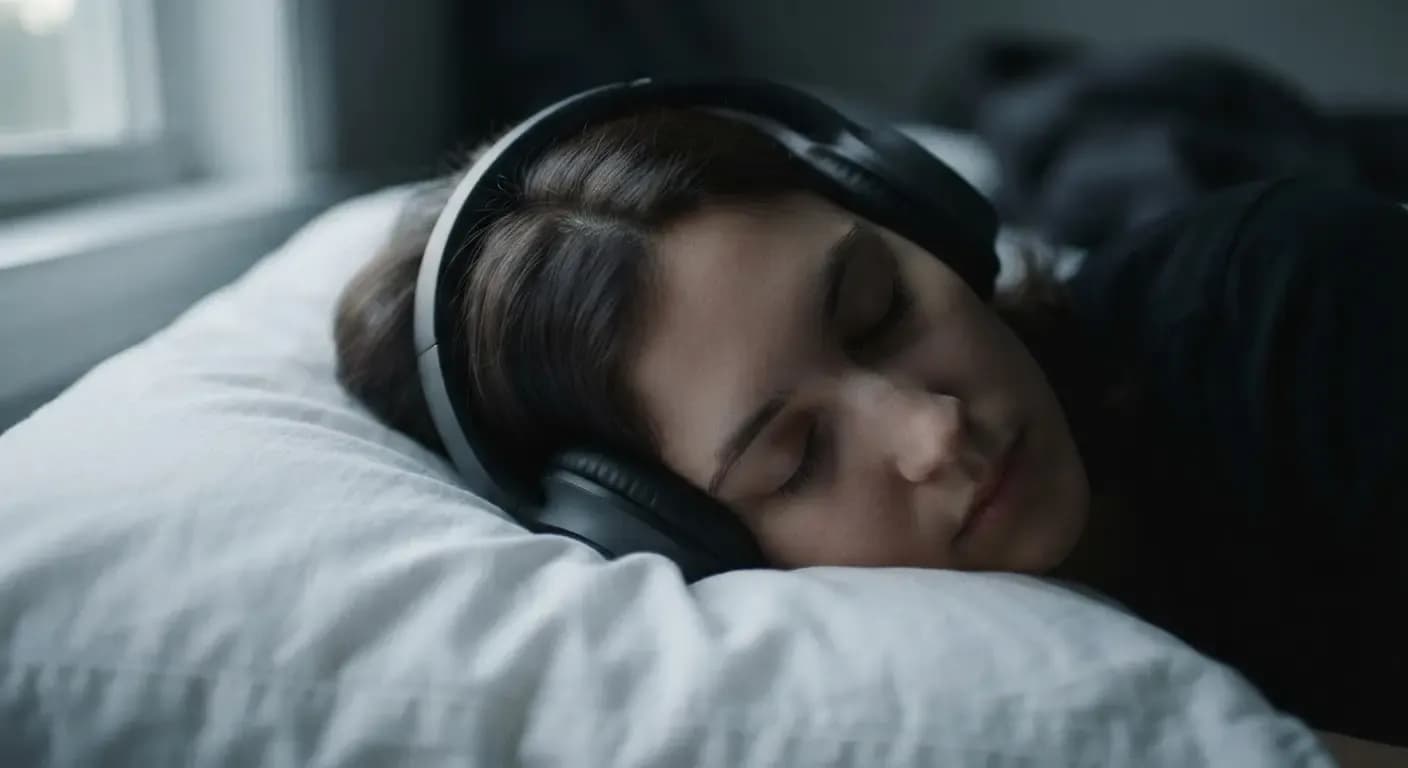
Tossing and turning at night, watching the clock tick closer to morning? If you've tried everything from warm milk to counting endless sheep and still can't find restful sleep, you're not alone. But what if the solution wasn't something you drink or count, but something you hear? This guide explores the science of binaural beats, a unique audio tool that might just be the key to unlocking the deep sleep you've been dreaming of.
"Imagine guiding your brain into a state of deep relaxation and sleep, just by listening to a specific sound. That's the simple promise of binaural beats."
What Are Binaural Beats? The Science of Sound Explained Simply
So, how can sound help you sleep? It sounds a bit like magic, but it's actually based on a fascinating brain trick. Binaural beats are an auditory illusion created inside your head. For them to work, you need to wear stereo headphones.
Here’s what happens: your left ear hears one frequency (say, 130 Hz), and your right ear hears a slightly different one (like 134 Hz). Your brain, trying to make sense of these two different tones, perceives a third, phantom beat at the difference between them. In this case, that would be 4 Hz. You don't actually hear this 4 Hz tone—your brain creates it.
This process is called 'brainwave entrainment'. Essentially, your brain's own electrical patterns start to sync up with this new, perceived rhythm. By choosing a specific rhythm, you can gently encourage your brain to shift into a state associated with relaxation or deep sleep. Remember, headphones are a must! Without them, your ears will just hear two separate tones, and the magic won't happen.
Decoding the Frequencies: Which Brainwaves Are Best for Sleep?
Not all binaural beats are designed for sleep. The frequency of the beat determines its effect on your brain. Understanding these different brainwave states is key to choosing the right track for your needs. Think of it like picking the right gear on a bike to go uphill versus downhill.
- Delta Waves (0.5-4 Hz): This is the sweet spot for sleep. Delta waves are associated with the deepest, most restorative stages of dreamless sleep. Listening to binaural beats in this range can help your brain enter and stay in this crucial recovery phase. According to a study in Psychological Research, listening to delta waves can help increase the duration of deep sleep.
- Theta Waves (4-8 Hz): Ever feel that floaty, almost-dreaming state as you're drifting off? That's the theta state. These waves are linked to light sleep, REM sleep (dreaming), and deep meditation. Research from Frontiers in Psychology suggests that theta waves can help reduce anxiety before bed and improve how well you feel you've slept.
- Alpha Waves (8-12 Hz): These are your relaxation waves. Alpha waves are present when you're calm, relaxed, and maybe a little daydreamy, but still awake. They are perfect for listening to as you wind down, read a book, or meditate before you're ready to actually fall asleep.
On the other hand, waves like Beta and Gamma are associated with alertness, problem-solving, and active thinking—definitely not what you want when trying to catch some Zs!
Choosing a Quality Source: Not All Binaural Beats Are Created Equal
A quick search online will give you thousands of binaural beat tracks, but their quality can vary wildly. An ineffective track won't just fail to work; it could be distracting and make it even harder to sleep. Here's what to look for in a quality source:
- Pure Tones: The tracks should use pure sine waves to create a clean effect without distracting harmonics.
- Accurate Frequencies: The frequency must be precisely calibrated for the intended state (e.g., exactly 2 Hz for deep sleep).
- High-Quality Audio: Free streaming sites often compress audio, which can distort the sounds and make the binaural beat less effective. Dedicated apps or services usually offer higher-quality, uncompressed audio.
- No Distractions: While some people like gentle background music, many find it distracting. The most common complaint about free sources is sudden, loud ads that completely ruin the relaxation effect.
- Sufficient Length: A track should be at least 15-20 minutes long to give your brain enough time to sync with the rhythm.
While free platforms like YouTube are a tempting place to start, they often fall short on these quality points. For a more reliable experience, it's often better to use a dedicated app or service designed specifically for brainwave entrainment.
Your Step-by-Step Guide to Using Binaural Beats for Sleep
Ready to give it a try? Following a simple routine can make all the difference. Consistency is key, as the benefits often build up over time.
- Create a Sleep Haven: Prepare your bedroom as you normally would for sleep. Make it dark, cool, and quiet to minimize any other distractions.
- Get Comfortable: Lie down in your favorite sleeping position. Find a pair of comfortable stereo headphones. Over-ear models can be bulky, so many people prefer soft sleep headbands with thin, built-in speakers, which are great for side sleepers.
- Choose Your Track: Start with an alpha wave track (8-12 Hz) for about 15 minutes to help your mind unwind. Then, switch to a theta (4-8 Hz) or delta (0.5-4 Hz) track as you feel yourself getting sleepy.
- Set the Volume: The beats don't need to be loud. Keep the volume low and comfortable, like background ambience.
- Let Go and Relax: Close your eyes, breathe deeply, and just let the sounds wash over you. Don't try to force sleep; just focus on the sensation of relaxation.
While binaural beats help guide your mind, you can also support your body’s natural relaxation systems. A supplement like NuviaLab Relax, with its combination of natural ingredients, is designed to help you relax, maintain emotional balance, and improve sleep quality. Pairing these approaches can create a powerful routine for better rest.
Frequently Asked Questions (FAQ)
Are binaural beats safe?
For most people, yes, binaural beats are very safe. However, individuals with epilepsy or a history of seizures should exercise caution, as rhythmic stimulation can be a potential trigger. It's also advised that people with pacemakers and children avoid them. And, of course, never listen to them while driving or operating machinery.
How long does it take for them to work?
This varies from person to person. Some people feel a sense of relaxation almost immediately. For improving sleep quality, it might take a few nights or even a week of consistent use to notice a real difference. Be patient with the process!
What’s the difference between binaural beats, isochronic tones, and ASMR?
They all can help with sleep, but they work differently. Binaural beats require headphones and use two tones to make your brain create a third. Isochronic tones use a single, pulsing tone and don't require headphones. ASMR isn't about brainwave entrainment at all; it's a sensory response to specific triggers like whispering or tapping that causes a relaxing, tingling sensation for some people. They are different tools, similar to how both binaural beats and white noise for sleep can help, but in their own unique ways.
Your Journey to Better Sleep Starts Tonight
Binaural beats aren't a magic pill, but they are a powerful, science-backed tool that can help you reclaim your nights. By gently guiding your brain into states of relaxation and deep rest, they offer a natural way to improve your sleep without side effects. The most important things to remember are to use a quality source for your tracks and to be consistent. Your brain learns this new skill over time. So, put on some headphones, press play, and see where a simple sound can take you.