The Ultimate Bird-Dog Exercise Guide for a Rock-Solid Core
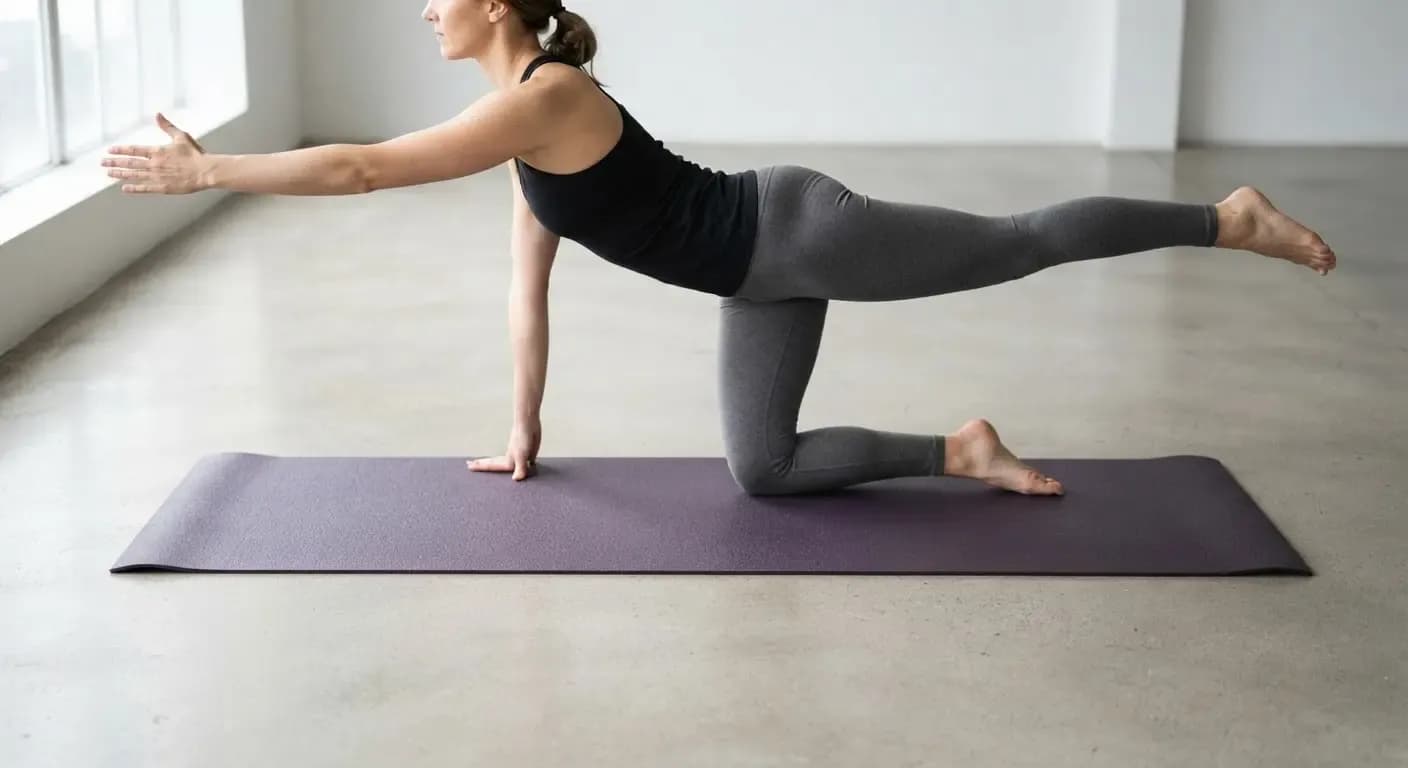
Are you looking for a way to build a strong, stable core without fancy gym equipment? You've probably heard of the bird-dog exercise. It seems simple, but so many people get it wrong, missing out on its amazing benefits for posture and back pain. The secret isn't just doing the move; it's about doing it right and knowing how to make it challenging as you get stronger.
"The bird-dog is one of the most effective core exercises you can do, but its real power is unlocked when you master the form and choose the right progression for your body."
Why the Bird-Dog Exercise is a Core Strength Staple
So, what makes this simple movement a favorite among physical therapists and top trainers? It’s not about getting a six-pack; it's about building a truly functional, resilient core from the inside out. The bird-dog is brilliant because it teaches your body to resist rotation, which is key for protecting your spine in everyday life, whether you're lifting groceries or playing a sport.
It works a whole team of important muscles without putting nasty stress on your lower back. Think of it as a smart alternative to endless crunches. The main benefits include:
- Improved Spinal Stability: It trains the deep core muscles, like the transverse abdominis and multifidus, that act like a natural corset for your spine.
- Enhanced Body Awareness: The slow, controlled movement forces you to pay attention to your body's position in space, improving balance and coordination.
- Glute Activation: Properly done, the bird-dog is fantastic for waking up your glutes, which are often weak from sitting too much. Strong glutes help support your lower back.
Because it's so safe and effective, it’s a go-to exercise for both preventing injuries and helping people recover from lower back issues. It builds the foundation for all other strength movements.
Comparison: The Best Ways to Enhance Your Bird-Dog
Once you've nailed the basic move, how do you keep making progress? Here’s a quick look at the best methods to take your bird-dog exercise to the next level. We’ve compared them based on what you need to achieve your goals.
Method/Tool — Best For — Key Benefit — Potential Downside — Call to Action
The Complete Core Program — Beginners & those needing structure — Expert guidance and progressive plans — Requires payment — See the Program
Resistance Bands — Intermediate users — Adds challenge and builds muscle — Awkward setup; doesn't correct form — N/A
Stability Ball — Advanced users — Dramatically improves balance — High difficulty; not for beginners — N/A
Bodyweight Only — Absolute beginners & rehab — Free, safe, and can be done anywhere — Progress can plateau over time — N/A
Option 1: The Complete Core Program (Best Overall)
If you want to take the guesswork out of building a strong core, a guided program is your best bet. We recommend this option because it provides a clear path from beginner to advanced, ensuring you do every exercise correctly and effectively.
A structured program offers features like guided video workouts, tutorials on perfect form for moves like the bird-dog, and progressive difficulty levels so you never hit a plateau. It’s a holistic approach that builds a balanced, functional core, not just strong abs.
- Pros: You get expert guidance, a structured plan that removes guesswork, and a variety of exercises to keep things interesting.
- Cons: The main downside is that it requires a subscription or one-time payment.
- Ideal For: This is perfect for anyone new to fitness, individuals who want a clear plan to follow, or people who have stopped seeing results and need expert guidance to break through a plateau.
For those serious about building a strong, resilient core, a top-rated guided program provides the structure you need. Start your structured core training today.
Option 2: Resistance Bands (Best for Progressive Overload)
Once you've mastered the bodyweight bird-dog, adding a resistance band is a great way to make it more challenging. You can loop a band around your feet or hold it between your hands to create tension as you extend your arm and leg. This forces your muscles to work harder through the entire movement.
- Pros: Bands are inexpensive, easy to pack for travel, and provide constant tension that’s great for building muscle strength.
- Cons: It can be a bit awkward to get the band into the right position. Also, a band adds resistance but can't correct poor form—it might even make it worse if you're not careful.
- Ideal For: Intermediate to advanced users who already have perfect bodyweight form and want to add a layer of difficulty.
Option 3: Stability Ball (Best for an Unstable Surface Challenge)
Ready for a serious challenge? Try performing the bird-dog with your torso resting on a stability ball. The wobbly surface forces all your tiny stabilizer muscles to fire up to keep you from falling over. This dramatically increases the demand on your core and improves your balance like nothing else.
- Pros: It engages way more muscles than the floor version and is a huge boost for your overall balance and coordination.
- Cons: This is a very difficult variation. It's not for beginners and carries a higher risk of falling if you lose your balance. You also need the space and the ball itself.
- Ideal For: Advanced fitness enthusiasts who have flawless form and are looking for a new way to test their core control and stability.
Option 4: Bodyweight Only (Best for Beginners)
Never underestimate the power of the classic, no-equipment bird-dog. This is the safest and most important starting point for everyone. Mastering the bodyweight version builds the mind-muscle connection and foundational strength you need before adding any extra challenges. It's a key part of the best exercise routine for core health.
Here’s how to do it perfectly:
- Start on all fours: Place your hands directly under your shoulders and your knees directly under your hips. Keep your back flat, like a tabletop.
- Brace your core: Gently tighten your stomach muscles, as if you're about to be poked in the belly.
- Extend slowly: Raise your right arm straight forward and your left leg straight back at the same time. Keep them parallel to the floor. Don’t lift them too high!
- Hold and return: Hold for a second, focusing on keeping your hips and shoulders perfectly still. Slowly lower your arm and leg back to the start. Repeat on the other side.
The most common mistake is arching the lower back or moving too quickly. Think slow, steady, and controlled.
Our Recommendation: Which Method Is Right for Your Core Goals?
So, what’s the final verdict? It all depends on where you are in your fitness journey.
- For the Absolute Beginner or Person with Back Pain: Start with the Bodyweight Only version. Your only job is to master the form. Once you feel confident and stable, the guided structure of the Complete Core Program is the safest and most effective way to progress without getting hurt.
- For the Fitness Enthusiast Seeking Progress: You've mastered the bodyweight bird-dog and maybe even tried bands. To break through plateaus and ensure you're developing your core in a balanced way, the Complete Core Program offers the progressive overload and exercise variety you need.
- For the Expert Seeking a New Challenge: If your form is truly perfect, adding a stability ball can be a fun new challenge. However, for a comprehensive approach that covers all aspects of core function, a dedicated program is still the superior choice.
Frequently Asked Questions (FAQ)
How often should I do the bird-dog exercise?
For most people, including the bird-dog exercise in your routine 3 to 4 times a week is a great goal. Listen to your body and focus on quality reps over quantity.
Can the bird-dog exercise reduce belly fat?
The bird-dog strengthens the muscles underneath the fat, which can improve your posture and make your midsection appear tighter. However, reducing belly fat comes down to your overall diet and burning more calories than you consume through a combination of diet and exercise.
I feel the bird-dog in my lower back. Is that normal?
You should feel this in your abs and glutes, not your lower back. If you feel a strain in your back, it's likely a sign of incorrect form. You may be arching your back or lifting your leg too high. Focus on keeping your spine neutral and core braced.
Is a program really better than just doing the exercises myself?
While doing exercises on your own is good, a structured program offers huge advantages. It provides expert guidance on form, tells you exactly when and how to progress, and offers variety to work your core in different ways. This removes guesswork and helps you get better, safer results, faster.
Your Next Step to a Stronger, Pain-Free Core
The bird-dog is a fundamental exercise for a healthy back and a strong core. While you can get started with just your bodyweight, true transformation comes from consistent, progressive, and guided practice. A structured program removes the confusion and ensures you're always moving toward your goal safely and effectively. It’s the difference between just exercising and actually training with a purpose.