Master the Dead Bug Exercise: The Ultimate Guide
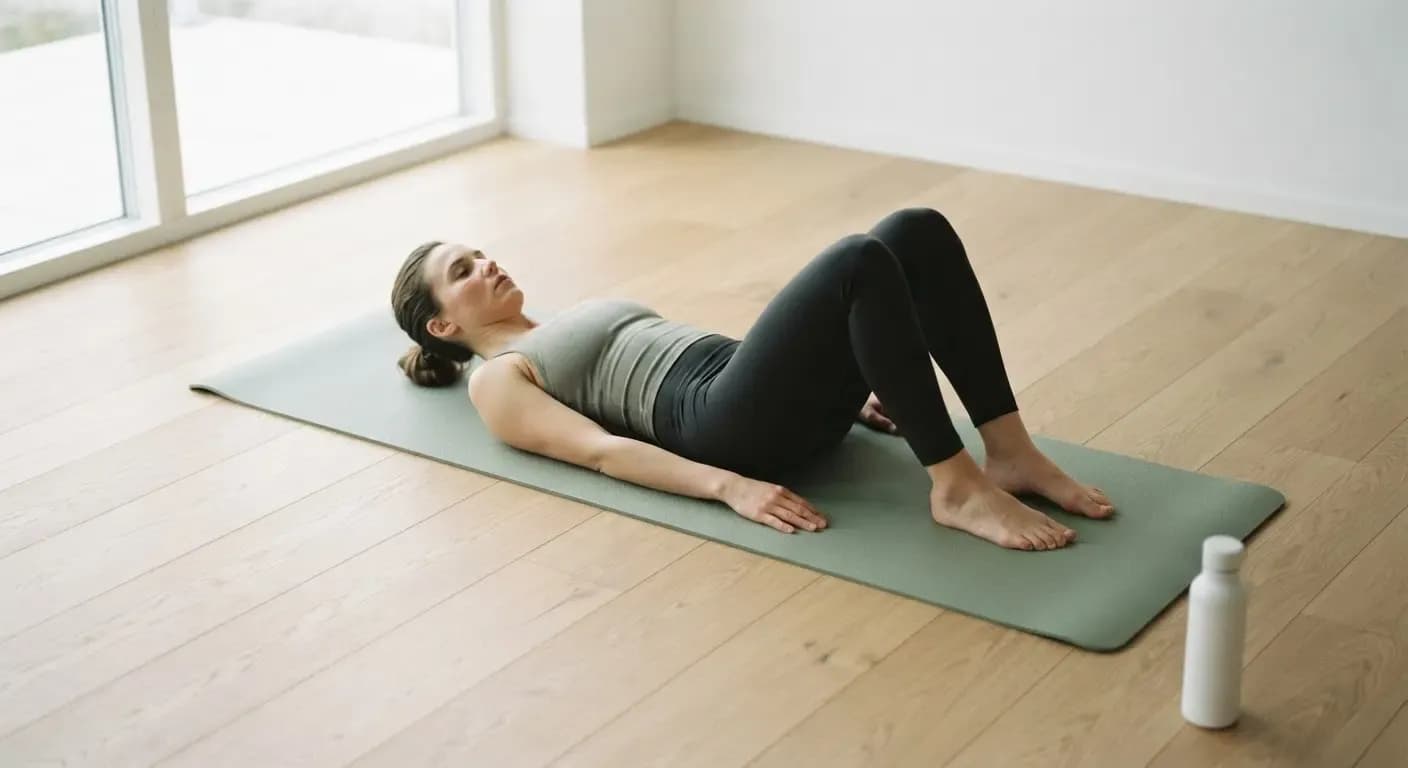
Ever feel like you're doing all the right core exercises but not seeing the results? Or worse, you end up with a sore lower back? You might be doing the dead bug exercise, a favorite of physical therapists, but many people make small mistakes that can completely undermine its benefits.
"The secret to a truly strong core isn't about doing more reps; it's about doing every single rep perfectly. The dead bug is proof of that."
Why the Dead Bug is Your Secret Weapon for a Strong, Pain-Free Core
Let's be honest, most of us want a strong, stable core. It helps with posture, reduces back pain, and makes every other movement stronger. But classic exercises like crunches can often do more harm than good, especially if you have a sensitive back. This is where the dead bug exercise shines. It’s designed to build deep core stability without putting stress on your spine.
The catch? Its effectiveness is all about perfect form. A tiny arch in your back or moving too quickly can make the exercise useless. This guide will not only teach you the right way to do it but also compare the do-it-yourself (DIY) approach with using a guided method so you can choose the safest and most effective path for you.
DIY Dead Bug vs. Guided Method: Which is Right for You?
Choosing how to approach a new exercise can be tricky. Do you watch a few videos and go for it, or is it worth seeking expert guidance? Here’s a quick comparison to help you decide.
Feature — DIY Method — Guided Method (Trainer/App)
Form Correction — Guesswork, based on videos — Expert cues and direct feedback
Progression — Unclear when or how to advance — Structured, logical progressions
Variety — Can become repetitive — Often includes multiple variations
Safety — Higher risk of lower back strain — Designed to be safe for your back
Cost — Free — Investment required
As you can see, while the free approach is tempting, a guided method offers a safer and more structured way to make progress, especially for beginners or those with a history of back pain.
Option 1: The Standard Dead Bug Exercise (The DIY Method)
If you're confident in your body awareness, the DIY method can be a great starting point. The key is to move slowly and with intention. Here’s how to perform the perfect dead bug:
- Starting Position: Lie on your back with your knees bent and feet flat on the floor. Raise your legs so your knees are directly over your hips, with your shins parallel to the floor (a 90-degree angle). Extend your arms straight up toward the ceiling.
- Engage Your Core: Gently press your lower back into the floor. You shouldn't be able to slide your hand under it. This is crucial! Exhale to brace your abdominal muscles.
- The Movement: Slowly lower your right arm and left leg toward the floor at the same time. Only go as low as you can while keeping your lower back pressed firmly into the floor.
- Return to Start: In a controlled motion, bring your arm and leg back to the starting position.
- Alternate Sides: Repeat the movement with your left arm and right leg. That’s one rep.
The biggest pros are that it's free and you can do it anywhere. However, the cons are significant: it's easy to get the form wrong, there's no one to correct you, and your progress can stall.
Top 3 Mistakes That Make the Dead Bug Useless
Watch out for these common errors:
- Arching your back: This is the most common mistake. If your lower back lifts off the floor, your core has disengaged, and you're putting stress on your spine.
- Rushing the movement: The magic of the dead bug is in the slow, controlled motion. Moving too fast uses momentum, not muscle.
- Forgetting to breathe: Holding your breath makes it harder to keep your core engaged. Remember to exhale as you lower your limbs and inhale as you return.
Option 2: The Guided Method (Working with a Pro or App)
If you read the list of mistakes above and felt a little uncertain, a guided approach might be your best bet. This could mean hiring a personal trainer, joining a class, or using a high-quality fitness app with clear instructions. This method directly solves the problems of the DIY approach.
A good program or trainer provides video tutorials to prevent form errors and structured levels so you always know what to do next. It's perfect if you have a history of back pain, are new to core training, or simply want the fastest, safest results. A guided approach also reduces the mental load of planning your best exercise routine. To further support a calm and focused state of mind during these precise movements, some people find that supplements like NuviaLab Relax, which contains ingredients that aid relaxation and emotional balance, can be helpful.
Ultimately, this path is about moving from uncertainty and potential pain to confidence and measurable core strength.
Our Final Verdict: How to Choose Your Path to a Stronger Core
So, which path is for you? There's no single right answer, but here’s our recommendation based on your goals and experience.
Stick with the DIY method if: You have experience with exercise, good body awareness, and are confident you can perform the movement without your lower back arching. You're on a tight budget and are willing to progress slowly.
Consider a guided method if: You are a beginner, have a history of back pain, or have tried the dead bug before and felt it in your back. You want to ensure you're doing it safely and want a clear plan for getting stronger.
Remember, the DIY method is a start, but investing in guidance from a professional or a quality program is an investment in your health, safety, and long-term results.
Frequently Asked Questions (FAQ)
How many reps and sets of dead bugs should I do?
A good starting point is 3 sets of 10-12 total reps (5-6 per side). Focus on perfect, slow form rather than a high number of reps.
Can I do dead bugs every day?
Because it's a low-impact stability exercise, you could do it every day. However, listening to your body is key. Giving your muscles 2-3 days a week of focused core work is often plenty.
Is the dead bug exercise good for beginners?
Yes, it's one of the best core stability exercises for beginners because it teaches you to brace your core properly without straining your neck or back. Just be sure to master the form.
Is the dead bug safe if I have diastasis recti?
The dead bug is often recommended for postpartum recovery and diastasis recti because it strengthens the deep transverse abdominis muscle. However, it's critical to avoid any bulging or coning of the abdomen. Always consult with a doctor or a physical therapist specializing in postpartum care first.
The Takeaway: Form is Everything
The dead bug exercise is a fantastic tool for building a strong, resilient core. Whether you choose to learn it on your own or with expert guidance, the most important thing is to prioritize perfect form. By moving slowly, keeping your back flat, and breathing correctly, you'll unlock the true power of this simple but effective movement.