Eating Healthy Fast Food: A Guide to Smarter, Quicker Meals
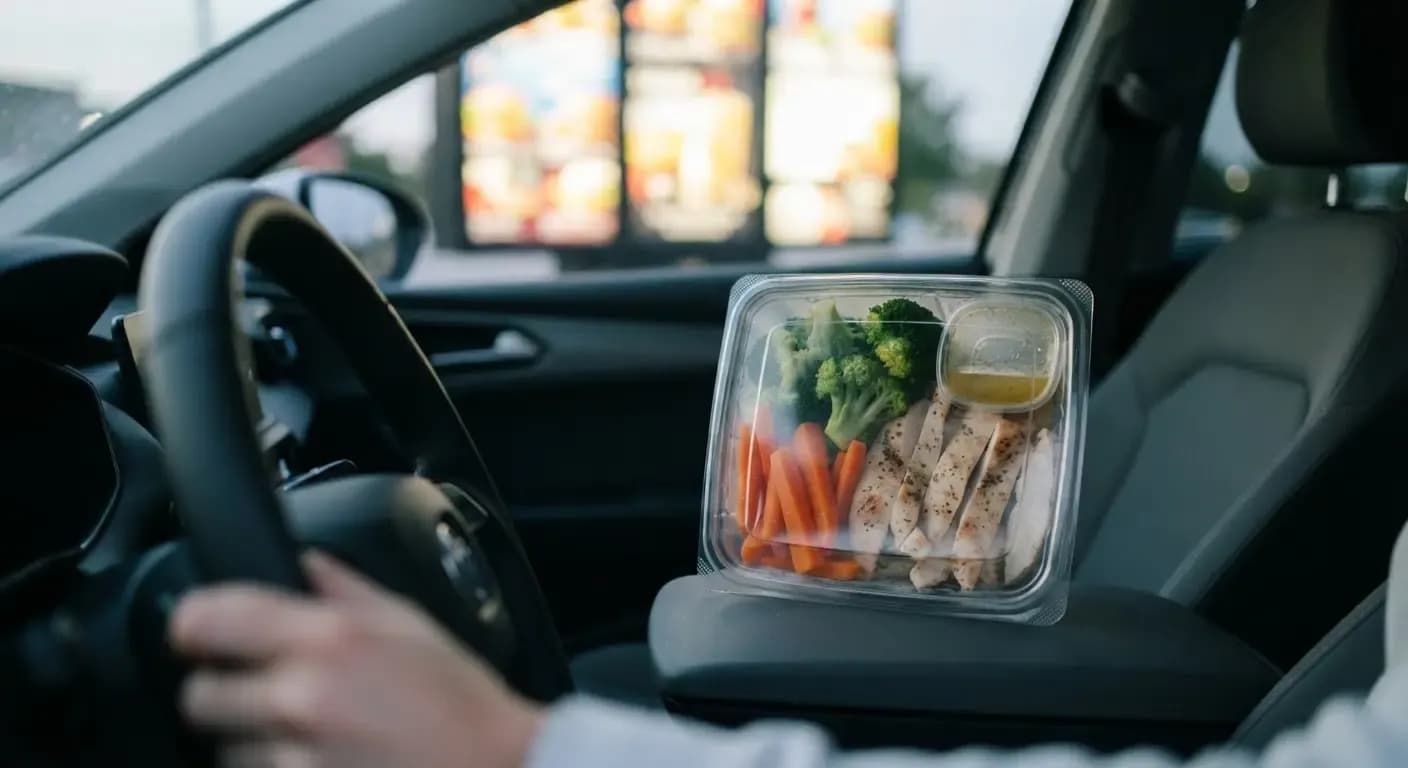
Ever feel like your car automatically steers into the drive-thru lane after a long day? You're not alone. The daily search for eating healthy fast food can feel like a trap. You want something quick and easy, but you don't want to undo all your hard work. Today, we're going to look at two different ways to handle this: trying to find the best healthy fast food options versus having a smarter meal strategy from the start.
"Trying to find a truly healthy meal at a fast-food joint is like trying to find a quiet corner at a rock concert. It's possible, but is it really worth the effort?"
The Real Challenge of Eating Healthy On the Go
Let's be real: life is busy. Between work, family, and everything else, you're often hungry and short on time. A drive-thru can seem like the only solution. But you don't want to sacrifice your health for convenience. So, what's the answer? This article compares two main strategies for eating healthy when you're in a hurry: navigating fast food menus versus adopting a planned meal system.
We'll compare them based on a few key things:
- Nutritional Control: Do you know exactly what you're eating?
- True Convenience: How much time and effort does it really take?
- Cost-Effectiveness: What's the real cost per meal?
- Ingredient Quality: Are the ingredients fresh and whole, or processed?
This article contains affiliate links. If you purchase a product through one of our links, we may receive a commission.
We'll show you the pros and cons of each path, helping you find a reliable way to eat well, no matter how busy you are. For those ready for a consistent solution, a structured plan like this one can be transformative.
Comparison: 'Healthy' Fast Food vs. A Planned Meal Solution
When you're eating on the go, every choice matters. Here’s a quick look at how trying to find healthy fast food stacks up against having a plan in place. It quickly becomes clear why one method gives you much more control over your health goals.
Criteria — 'Healthy' Fast Food — A Planned Meal Solution
Nutritional Control — Guesswork. Hidden sugars, sodium, and unhealthy fats are common. — Precision. You know exactly what’s in your meal, down to the last calorie.
True Convenience — Requires driving, waiting in line, and then eating. Not as fast as it seems. — Ready in minutes. No travel, no waiting.
Cost Per Meal — Deceptively high. A 'premium' healthy option can be expensive. — Predictable and often more affordable in the long run.
Ingredient Quality — Highly variable and often processed to last longer. — Focused on whole, high-quality ingredients.
Decision Fatigue — High. You have to analyze menus and fight off temptations. — Eliminated. The healthy choice is already made for you.
Take Action — Hope for the best. — Discover a Better Way
Option 1: Navigating the 'Best' Healthy Fast Food Choices
Okay, so sometimes you're in a pinch and fast food is the only option. We get it. If you have to do it, making a smarter choice is key. This is about damage control. Here are some of the better-for-you fast food alternatives you can look for.
Grilled Chicken Sandwiches
A simple grilled chicken sandwich on a whole-wheat bun can be a decent source of protein. Just be careful with the sauces.
- Pros: Widely available at most chains and satisfies immediate hunger with lean protein.
- Cons: Often comes with high-sodium sauces or mayonnaise. The chicken can be processed, and there's a risk of cross-contamination with fried foods.
Salad or Grain Bowls
Bowls seem like the ultimate healthy choice, and they can be! But the extras can turn them into a calorie bomb.
- Pros: You can load up on veggies and lean protein. They feel like a real, satisfying meal.
- Cons: Creamy dressings, crispy toppings, and extra cheese can add hundreds of calories. A salad can easily have more calories and fat than a burger.
While these are good in a pinch, you can see how a planned approach eliminates all the guesswork and hidden traps.
Option 2 (Our Top Pick): A Proactive Nutrition Plan
Instead of reacting to hunger with whatever's closest, a proactive plan puts you in the driver's seat of your health. This is our top recommendation because it’s about consistency, not just survival. This approach helps you build sustainable habits for healthy eating and weight loss.
The Pros of a Planned System
- Eliminates decision-making: The healthy choice is the easy choice because it’s already planned. No more debating with yourself in the drive-thru line.
- Guarantees nutritional accuracy: You know exactly what you're eating. No hidden sugars, no surprise calories. You have full control.
- Saves significant time: Think about all the time you spend driving to get food, waiting, and coming back. A planned meal is ready in minutes.
- Uses high-quality ingredients: These systems are built around whole foods, giving your body the fuel it actually needs.
The Cons to Consider
- Requires some pre-planning: You have to think ahead or sign up for a subscription. It's not an 'on-demand' fix for a sudden craving.
Who is this for?
This is for the busy professional, the person focused on fitness, or anyone who is simply tired of the daily stress of figuring out what to eat. If you want consistent results without the daily struggle, this is for you. See How It Works & Get Started Today.
Final Verdict: Which Healthy Eating Strategy Is Right for You?
So, which path should you choose? It really depends on your lifestyle and goals.
Profile 1: The 'Occasional Traveler' or 'Emergency Eater'
For this person, knowing the best healthy fast food options is a useful survival skill. If you're on a long road trip or stuck in an airport, grabbing a grilled chicken sandwich is much better than a greasy burger. It’s a good backup plan for unexpected situations.
Profile 2: The 'Health-Conscious Professional'
For this person, consistency is everything. Your time and mental energy are too valuable to waste on analyzing menus and fighting temptation. A planned solution is a strategic upgrade to your lifestyle. It removes stress, guarantees results, and gives you back your time. It’s the most effective choice for reaching long-term goals. If this sounds like you, it's time to Become a Consistent Achiever.
Frequently Asked Questions (FAQ)
What is the biggest trap in 'healthy' fast food?
The biggest trap is definitely the sauces, dressings, and toppings. A simple salad can become unhealthier than a cheeseburger with just a ladle of creamy ranch dressing. Always ask for dressings on the side and be mindful of anything described as 'crispy' or 'creamy'.
Are plant-based fast food options actually healthy?
Not always. While they are better for the environment, many plant-based burgers are engineered to taste like their meat counterparts, which means they can be high in sodium, saturated fat, and calories. They are still highly processed foods.
How can I save money while trying to eat healthy on a busy schedule?
Surprisingly, planning your meals is often cheaper than buying fast food daily. Those 'healthy' $12 salads and sandwiches add up quickly. A planned system gives you a predictable food budget and stops impulsive, expensive food purchases.
Is it better to get a salad or a grilled chicken sandwich?
It depends entirely on the preparation. A simple grilled chicken sandwich with lettuce and tomato is often a safer bet than a large salad loaded with cheese, bacon bits, croutons, and a high-fat dressing. The name 'salad' doesn't automatically make it the low calorie fast food option.
Stop Guessing, Start Succeeding
While it's possible to make smarter choices at fast food chains, it’s an unreliable strategy that depends on willpower and navigating nutritional minefields. It's a short-term fix, not a long-term solution.
A proactive, planned approach removes the guesswork, saves you time, and provides the consistency you need to actually achieve your health and fitness goals. If you're ready to stop surviving and start thriving, it's time to take control of your nutrition. Take Control of Your Meals Today.