The Complete Guide to Full Body Workout Routines
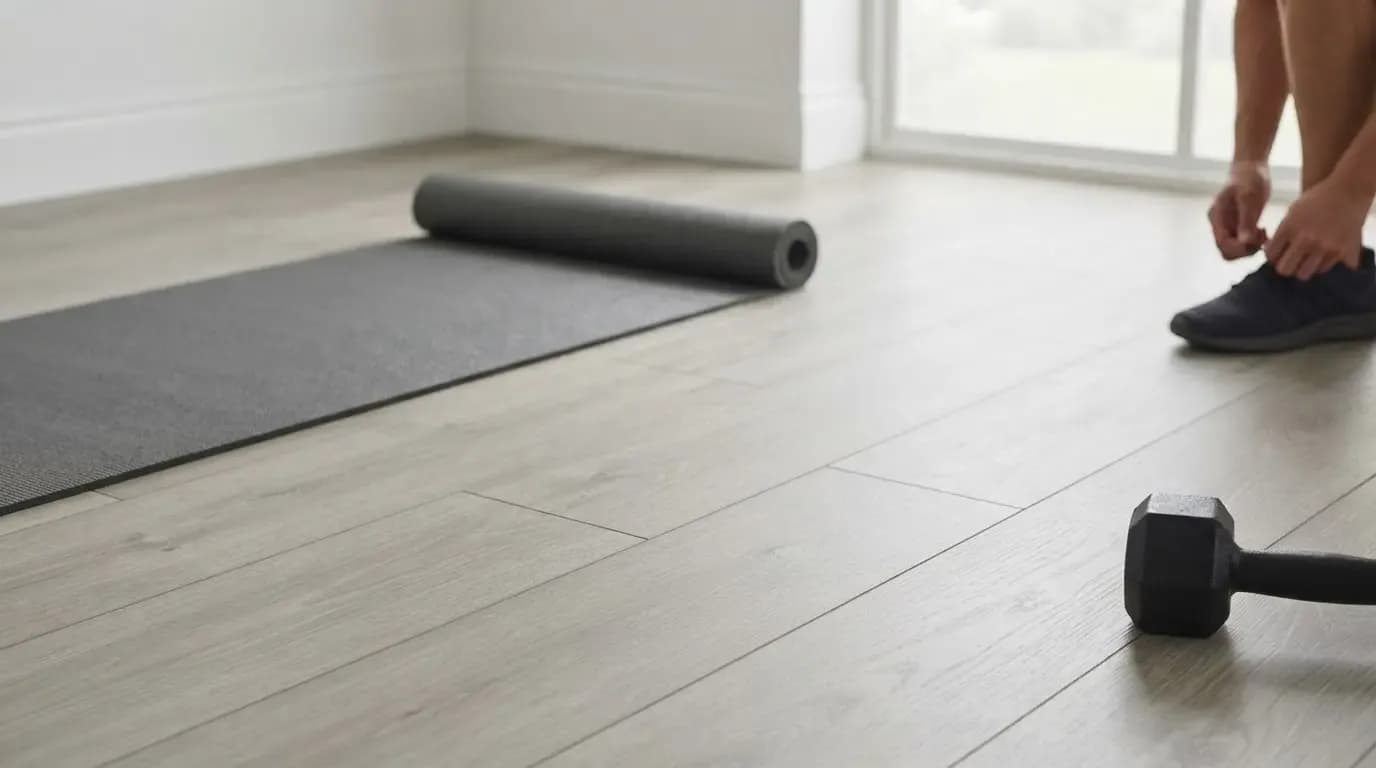
Are you tired of complicated workout plans that feel like a full-time job? Juggling different muscle groups on different days can be confusing and, honestly, easy to give up on. What if there was a simpler, more powerful way to get fit? A full body workout routine might be the solution you've been looking for. This guide will show you everything you need to know, from the basics of total-body training to building your very own plan from scratch.
"What if the secret to getting stronger wasn't more time in the gym, but a smarter, more efficient workout? It's time to discover the power of full-body training."
Why a Full Body Workout is Your Most Efficient Path to Fitness
Let's be real, most of us don't have hours to spend at the gym every day. We get busy, life happens, and suddenly that complex "chest and tri's" day gets skipped. The beauty of a full body workout routine is that it trains all your major muscle groups—legs, back, chest, shoulders, and arms—in a single session. This is amazing for a few reasons. First, it's super time-efficient. You can get a fantastic workout in just a few days a week. Second, you end up burning more calories per session because you're using so many muscles. And finally, it builds functional, real-world strength that helps you in your daily life.
While you can absolutely build your own plan, it's also important to manage the stress that comes with a new routine and ensure your body recovers properly. After all, results happen when you rest, not just when you train. Good sleep and a calm mind are just as crucial as lifting weights.
This article contains affiliate links.
For those who want to support their recovery, good mood, and emotional balance throughout their fitness journey, this carefully developed formula can be a great addition to your routine.
The Fundamentals: Full Body Training vs. Traditional Splits
So, what's the big difference between a full body routine and what you might see others doing at the gym? Most popular plans use a 'split' routine. This means they split the body up and train different parts on different days, like a Push/Pull/Legs schedule or a body-part split (Monday is chest day, Tuesday is back day, and so on).
Full body workouts have some big advantages, especially for beginners. You stimulate your muscles more frequently (usually 2-3 times per week), which research suggests is great for growth. Plus, if you have to miss a workout, it's no big deal! You didn't skip your only leg day of the week; you'll just hit them again in your next session. Split routines, on the other hand, allow for more focused work on a single muscle group in one session, which can be useful for advanced bodybuilders with very specific goals. But for most of us who just want to get stronger, lose fat, and feel better, a full body routine is often the most practical and effective choice.
Factor — Full Body Routine — Split Routine
Best For — Beginners & general fitness — Advanced lifters & bodybuilders
Time Commitment — 2-3 days per week — 4-6 days per week
If You Miss a Day — Easy to get back on track — Can throw off the whole week's schedule
Muscle Frequency — High (2-3x per week) — Low (1-2x per week)
How to Design an Effective Full Body Workout Plan
Building your own beginner exercise routine doesn't have to be complicated. A great full body plan is built on five foundational human movement patterns. If you include an exercise from each category in your workout, you've pretty much covered all your bases.
- Squat: A lower-body movement where you bend your knees. Think Goblet Squats or Bodyweight Squats.
- Hinge: Bending at the hips, not the waist. Examples include Romanian Deadlifts or Kettlebell Swings.
- Push: Pushing a weight away from your body. This can be horizontal (like a chest exercise such as Push-ups) or vertical (like an Overhead Press).
- Pull: Pulling a weight towards your body. Think Dumbbell Rows or Pull-ups (or a lat pulldown for a great back exercise).
- Carry: Picking up something heavy and walking with it. The Farmer's Walk is a perfect example.
Once you pick your exercises, you need to decide on sets, reps, and rest. For building strength, aim for 3-5 sets of 3-6 reps with longer rest periods (2-5 minutes). For muscle growth, 3-4 sets of 8-12 reps with about 1-2 minutes of rest is a great starting point. The most important rule of all? Progressive Overload. This just means you have to gradually make your workouts harder over time. You can do this by adding a little more weight, doing one more rep, or adding an extra set. This is how you tell your body it needs to adapt and get stronger.
Proper exercise programming takes focus and consistency. To make sure your mind is sharp and stress isn't getting in the way of your progress, it's helpful to support your cognitive abilities and sense of calmness. Focusing on your mental well-being is a key part of the fitness puzzle.
Sample Weekly Workout Plan for Beginners (A/B Routine)
Here is a simple and effective weekly workout plan. You'll perform this routine 3 times a week on non-consecutive days. For example: Monday (Workout A), Wednesday (Workout B), Friday (Workout A). The next week, you'd start with Workout B.
Workout A
Exercise — Sets — Reps — Rest
Goblet Squats — 3 — 8-10 — 60-90 sec
Push-ups (on knees or incline if needed) — 3 — As many as you can — 60-90 sec
Dumbbell Rows — 3 — 8-10 per arm — 60-90 sec
Plank — 3 — 30-60 sec hold — 60 sec
Workout B
Exercise — Sets — Reps — Rest
Romanian Deadlifts (with dumbbells or kettlebell) — 3 — 10-12 — 60-90 sec
Dumbbell Overhead Press — 3 — 8-10 — 60-90 sec
Glute Bridges — 3 — 12-15 — 60 sec
Farmer's Walk — 3 — 30 sec walk — 60 sec
Remember to always start with a 5-minute warm-up (like light cardio and dynamic stretches) and finish with a cool-down (static stretching) to help with recovery.
Frequently Asked Questions (FAQ)
How many days a week should I do a full body workout?
For beginners, 2-3 days per week on non-consecutive days is perfect. This gives your body enough time to recover and adapt between sessions. More advanced lifters might do up to 4 days, but 3 is a sweet spot for most people.
Can you really build muscle with full body workouts?
Absolutely. Because you're hitting each muscle group multiple times per week, full body workouts provide a great stimulus for muscle growth. As long as you are consistent and apply progressive overload, you will build muscle.
Is a 30 minute workout routine effective?
Yes, a 30 minute workout routine can be very effective. The key is to keep the intensity high and the rest periods controlled. Focus on big, compound exercises that work multiple muscles at once to get the most bang for your buck.
When should I change my exercise routine?
Probably not as often as you think! Don't fall into the trap of 'muscle confusion'. Stick with a program for at least 8-12 weeks. As long as you're still able to add weight or reps (progressive overload), the program is working.
Should I do cardio before or after my full body workout?
For best results, do your strength training first. You want to have the most energy for lifting weights to get stronger and prevent injury. A light cardio session after your workout is a great way to finish.
Conclusion: Your Next Step to a Stronger Body
To sum it all up, full body workout routines are a fantastic choice. They are efficient, incredibly effective for building muscle and strength, and flexible enough for even the busiest schedules. You now have the knowledge to get started. You can use the templates and principles in this guide to build your own home or gym exercise routine and start tracking your progress.
But remember, training is only half the battle. To truly progress, your body needs to recover. This means managing stress, getting quality sleep, and maintaining your emotional balance. For those who want to support this crucial recovery process, focusing on your well-being from the inside out is the fastest way to see and feel results. Taking care of your mind is just as important as taking care of your muscles.
Ready to support your entire fitness journey? Stop leaving recovery to chance. Support your fitness from the inside out by promoting relaxation, a good mood, and quality sleep. Learn more about supporting your recovery here.