Unlock Tight Hips: The Complete Guide to Hip Flexor Stretches
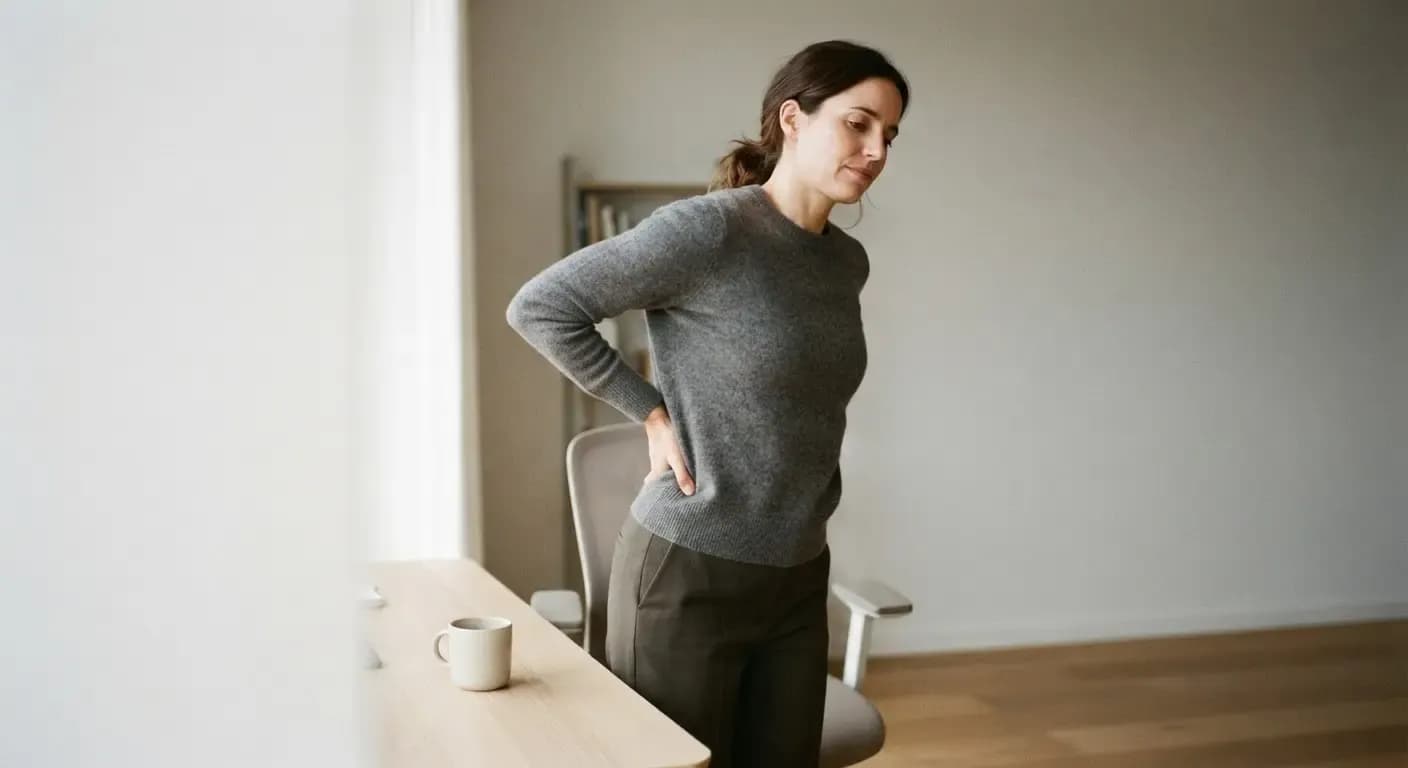
Do you ever stand up after a long day at your desk and feel that tight, nagging pull in the front of your hips? You're not alone. So many of us, from office workers to dedicated runners, are dealing with tight hip flexors without even realizing the full impact they have on our bodies. It's more than just stiffness; it can be the hidden source of that mysterious lower back pain and even poor posture.
"What if the key to unlocking better movement and saying goodbye to nagging pain isn't about more effort, but about releasing the one muscle group that's been in lockdown for years?"
Why Your Tight Hips Are Holding You Back (and How to Fix It)
Whether you spend your days sitting in a chair, cycling long distances, or pounding the pavement on a run, your hips are taking a beating. This chronic tightness in your hip flexors can cause a chain reaction of problems. It can tilt your pelvis forward, creating an arch in your lower back that leads to persistent pain. It can also shorten your stride and limit your power, holding you back from your best athletic performance.
This guide will walk you through everything you need to know. We’ll explore what your hip flexors are, how to figure out if they're actually tight, and the most effective exercises to release them. Forget temporary fixes; we're aiming for lasting relief and better movement.
What Are Hip Flexors? A Simple Anatomy Lesson
So, what exactly are these muscles everyone talks about? Your hip flexors are a group of muscles near the top of your thighs. The main players are the psoas and the iliacus, which are often grouped together and called the iliopsoas. Think of them as the engine that lifts your legs.
Their main job is to pull your knee toward your chest. This is the motion you use when you walk, run, or climb stairs. They also play a big role in stabilizing your lower spine. Problems pop up for two main reasons:
- Chronic Shortening: When you sit for hours on end, your hip flexors are held in a shortened, flexed position. Over time, they adapt to this and become chronically tight.
- Overuse: Activities like running, cycling, or even doing a ton of sit-ups can overwork the hip flexors, leading them to become tight and fatigued.
Understanding this helps explain why just a simple psoas stretch or iliacus stretch can bring so much relief. You're helping the muscle return to its natural, healthy length.
Test Yourself: Do You Actually Have Tight Hip Flexors?
Before you jump into a bunch of stretches, it’s a good idea to see if your hip flexors are really the problem. Besides just feeling tight, other common symptoms include a nagging ache in your lower back, pain at the very front of your hip, or even a clicking or snapping sound when you move.
Here’s a simple way to check, called the Thomas Test. You can do it at home on the edge of your bed or a sturdy table.
- Lie on your back at the very edge of the bed.
- Pull both of your knees toward your chest until your lower back is flat against the surface.
- Hold onto one knee, keeping it pulled in tightly.
- Slowly lower the other leg, letting it hang off the edge of the bed.
Now, look at the leg you lowered. If your hip flexors are flexible, the back of your thigh should be able to rest flat on the bed, and your knee should be bent to about 90 degrees without you forcing it. If your thigh pops up off the bed or your knee straightens out, that's a classic sign of tight hip flexors.
The 5 Most Effective Hip Flexor Stretch Exercises
Ready to get some relief? Here are five of the best hip flexor stretch exercises that you can do at home. The key is to move slowly and focus on the feeling, not on pushing yourself too far.
1. Kneeling Hip Flexor Stretch (Lunge)
This is the classic hip flexor stretch, but most people do it wrong. The secret is in the pelvic tilt. Get into a lunge position with your back knee on the ground (use a cushion if you need to). Instead of leaning forward and arching your back, keep your torso upright and gently tuck your tailbone under. You should feel a stretch in the front of your hip on the back leg. Hold for 30 seconds.
2. Supine Figure Four Stretch
A great option if you have sensitive knees. Lie on your back with your knees bent and feet flat on the floor. Cross your right ankle over your left thigh. Now, reach through and grab the back of your left thigh, gently pulling it toward your chest until you feel a stretch in your right hip and glute. Hold for 30 seconds and switch sides.
3. Pigeon Pose
This yoga pose is fantastic for hip mobility. From a hands-and-knees position, bring your right knee forward and place it behind your right wrist. Angle your shin so your right foot is somewhere in front of your left hip. Slide your left leg straight back. If this is too intense, place a yoga block or pillow under your right hip for support. Hold for 30-60 seconds before switching.
4. Lying Psoas Stretch
This is a wonderfully passive stretch. Lie on your back on your bed with one leg hanging off the side. Let gravity do the work, gently pulling your leg down to stretch the front of your hip. You can deepen the stretch by pulling the opposite knee toward your chest. Relax into it for at least 60 seconds.
5. Standing Hip Flexor Stretch
Perfect for a quick break at the office. Stand tall and step one foot back. Gently bend your front knee and tuck your pelvis under, just like in the kneeling stretch. You should feel a stretch in the hip of your back leg. It's a great stretch for desk workers to break up long periods of sitting.
Beyond Stretching: The Importance of Strengthening
Here's a piece of the puzzle many people miss: stretching alone might only give you temporary relief. If your tight hips come right back, it’s often because of weakness in opposing muscles, especially your glutes. It’s a concept called reciprocal inhibition—in simple terms, if your glutes are weak, your hip flexors have to work overtime to stabilize your pelvis, and they become tight as a result.
To make your stretching stick, you need to strengthen your glutes and core. This creates balance and stability. Try adding these exercises to your routine:
- Glute Bridges: Lie on your back, knees bent. Squeeze your glutes to lift your hips off the floor. Hold for a moment, then lower.
- Planks: A classic for a reason. They teach your entire core to work together to stabilize your spine.
- Bird-Dogs: Start on all fours. Extend your right arm and left leg simultaneously, keeping your back flat. Return to the start and switch sides.
Frequently Asked Questions (FAQ)
How often should I stretch my hip flexors?
If your hips are very tight, aim for daily stretching. Even 5-10 minutes a day can make a huge difference. Once they start to loosen up, you can maintain them by stretching 3-4 times per week.
Is it normal to feel pain in my lower back when I stretch my hips?
No, you shouldn't feel sharp pain. If you feel a pinch in your lower back, it's likely because you're arching your back instead of isolating the hip flexor. Focus on tucking your pelvis (posterior tilt) to protect your back and get a better stretch.
Can I use a foam roller on my hip flexors?
You can, but it can be tricky. The hip flexors are deep muscles, and there are sensitive nerves and organs in that area. It's generally safer and more effective to stick to the stretches described above. If you do use a roller, be very gentle and avoid rolling over your bony hip point.
How long does it take to loosen tight hip flexors?
It depends on how tight they are and how consistent you are. You might feel some immediate relief after your first stretching session, but achieving lasting flexibility can take several weeks or even a few months. Consistency is more important than intensity.
Your Action Plan for Pain-Free, Mobile Hips
You now have a complete plan to take back control of your hip health. It's a simple, three-step process: First, assess your tightness with the Thomas Test to know your starting point. Second, incorporate the right hip flexor stretch exercises into your daily routine, focusing on proper form. And third, strengthen your glutes and core to create stability and make that new flexibility last.
Remember, consistency beats intensity every time. A few minutes of mindful stretching and strengthening each day will do more for you than one long, aggressive session per week. You have the power to unlock your hips and move through life with more freedom and less pain.