5 Best Rear Delt Fly Exercise Variations for Strong Shoulders
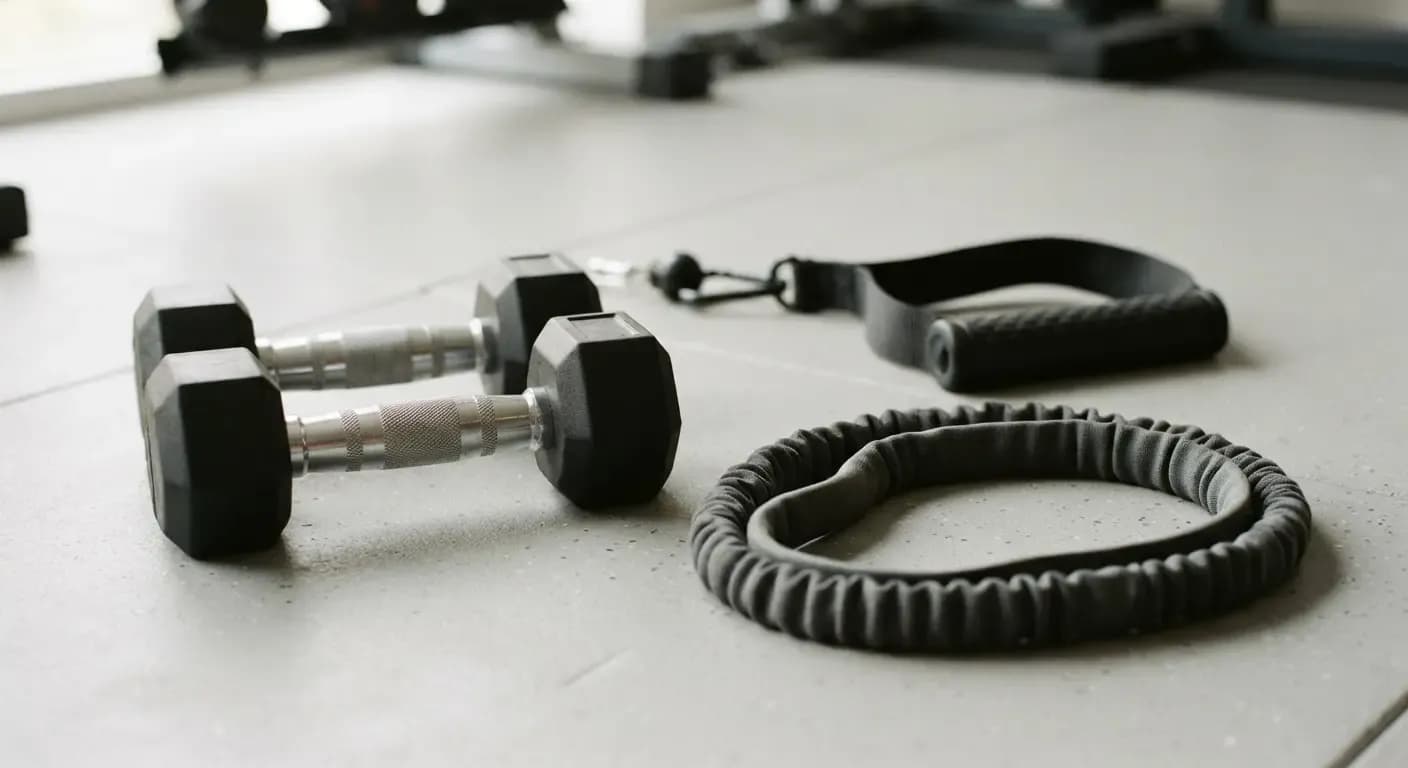
We all want those strong, well-rounded shoulders that pop. But so often, we focus on the front and sides, completely forgetting about the back. The rear deltoids are the unsung heroes of a balanced physique and good posture. If you've been neglecting them, the rear delt fly is the perfect exercise to bring them up to speed.
"Struggling to build those capped, 3D shoulders? The secret might be in the one muscle you're ignoring. This guide breaks down the best rear delt fly exercise variations to fix imbalances, improve posture, and finally build the shoulders you want."
Rear Delt Fly Exercise Comparison: Find Your Perfect Match
With so many ways to do a rear delt fly, which one is right for you? It all depends on your goals, experience, and what equipment you have. This table breaks it down so you can easily find your perfect match.
Exercise Variation — Equipment Needed — Difficulty Level — Muscle Isolation — Best For
Dumbbell Bent-Over Fly — Dumbbells — Intermediate — Moderate — Building foundational strength
Incline Bench Fly — Dumbbells & Bench — Beginner — High — Learning strict form
Machine Fly (Pec Deck) — Pec-Deck Machine — Beginner — Very High — Ultimate isolation & finishers
Cable Fly — Cable Machine — Intermediate — High — Constant muscle tension
Resistance Band Fly — Resistance Bands — Beginner — Moderate-High — Home gyms & travel
Now let's dive into each variation so you know exactly how to perform them for the best results.
The 5 Best Rear Delt Fly Variations
1. Dumbbell Bent-Over Rear Delt Fly: The Classic Builder
This is the classic version you've probably seen before. You hinge at your hips, keeping your back straight, and lift the dumbbells out to your sides. The key is to avoid using momentum. Squeeze your shoulder blades together at the top of the movement.
Pros: It's super accessible since most gyms and many home gyms have dumbbells. It’s also fantastic for building foundational strength. Cons: It’s easy to get the form wrong. If you use too much weight or round your back, you risk straining your lower back. This one requires a bit of practice to master.
Ideal For: Lifters who already feel comfortable with the hip-hinge movement (like in a deadlift) and are ready to start adding some weight to their rear delt exercises.
2. Incline Bench Rear Delt Fly: Best for Strict Form
For this variation, you lie face down on an incline bench set at a low angle. This supports your chest and torso, taking your lower back completely out of the equation. From there, you perform the fly motion with dumbbells, just like the bent-over version.
Pros: Because the bench provides support, you can’t cheat with momentum. This means amazing muscle isolation for your rear delts. It's a very safe way to learn the movement. Cons: You need an adjustable bench, which not everyone has. The strict form might also mean you have to use lighter weights than you're used to.
Ideal For: Beginners who want to nail the form safely, or anyone who wants to really focus on the mind-muscle connection without worrying about their back.
3. Machine Rear Delt Fly (Pec Deck): The Ultimate Isolation
Most gyms have a pec-deck machine that can be used in reverse to target the rear delts. You sit facing the machine, grab the handles, and open your arms outward against the resistance. The path of motion is fixed, making it incredibly straightforward.
Pros: The fixed movement path makes the risk of injury extremely low. It's simple to learn and perfect for high-rep sets or drop sets at the end of a workout. Cons: You're limited to a specific machine that might be popular at the gym. It also develops less functional, stabilizing strength compared to free weights.
Ideal For: Anyone at any level. It's especially useful as a burnout exercise to finish your shoulder day when you're too tired to maintain perfect free-weight form.
4. Cable Rear Delt Fly: For Constant Tension
Using a cable crossover machine, you can perform rear delt flys either standing or bent over. The big advantage here is that the cables provide constant tension on the muscle throughout the entire range of motion—something you don't get with dumbbells.
Pros: The resistance is incredibly smooth and consistent, which is great for muscle growth. You can also adjust the pulleys and handles to hit your delts from slightly different angles. Cons: It requires a cable machine, which can be tough to get on during peak gym hours. The setup can feel a bit awkward at first.
Ideal For: Lifters who want to maximize their time-under-tension. This constant resistance is a fantastic tool for sparking new muscle growth (hypertrophy).
5. Resistance Band Rear Delt Fly: Best for Home & On-the-Go
This is easily the most versatile and accessible option on the list. You can do them as "pull-aparts" by standing and pulling the band across your chest, or you can perform a bent-over version similar to the dumbbell fly. The possibilities are endless.
Pros: Resistance bands are inexpensive, lightweight, and portable. You can do this exercise literally anywhere. They are low-impact and perfect for warm-ups or high-rep burnout sets. Cons: The resistance is limited, so if your goal is to lift super heavy, you'll eventually need to supplement with weights.
Ideal For: Anyone with a home gym, people who travel, beginners learning the movement, and as a warm-up or finisher for lifters of all levels. It's our top recommendation for pure versatility.
How to Choose the Best Rear Delt Fly Variation For You
Still not sure which one to pick? Let's break it down by your goals.
If You're a Beginner: Start with the Incline Bench Fly or the Machine Fly. These variations protect your back and force you to learn the correct movement pattern without being able to cheat.
If You Train at Home: The clear winner is the Resistance Band Fly. It's cost-effective, space-saving, and surprisingly challenging. You can also supplement with Dumbbell Flys if you have them.
If Your Goal is Maximum Muscle Growth: You'll want a combination. Use heavy Dumbbell or Cable Flys as your main strength movement to create overload. Then, finish your workout with high-rep sets on the Machine Fly or with Resistance Bands to maximize the pump.
Frequently Asked Questions (FAQ) About the Rear Delt Fly
How often should I train rear delts?
The rear delts are a smaller muscle group that can recover relatively quickly. Training them 2-3 times per week with good form is a great approach for most people.
How much weight should I use for a rear delt fly exercise?
Focus on light weight and perfect form. The goal is to isolate a small muscle, not to lift with your ego. If you have to swing your body to move the weight, it's too heavy.
What's the difference between a rear delt fly and a face pull?
They are both fantastic exercises that target similar muscles in your upper back and shoulders. A rear delt fly is more of an isolation movement for the rear deltoid, while a face pull also heavily involves other muscles like the traps and rotator cuff. Including both in your routine is a great idea!
The Final Verdict: Your Next Step to Broader Shoulders
The biggest takeaway is this: if you want truly well-rounded, 3D shoulders, you can't ignore your rear delts. The 'best' rear delt fly exercise really comes down to what equipment you have and what your specific goals are. Any of the variations on this list will deliver great results if you focus on form and consistency.
However, for overall versatility, safety, and accessibility, the resistance band variation is an outstanding choice for almost everyone. It's the perfect tool to start building stronger, healthier shoulders right away, whether you're at home or on the road.