The Ultimate Guide to High-Protein Foods for a Healthy Diet
Are you trying to eat healthier, maybe lose a bit of weight, or build some strength? If so, you've probably heard a ton about protein. It feels like it's everywhere! But protein isn't just for bodybuilders lifting heavy weights. It's a fundamental building block for a healthy body, and getting enough can make a huge difference in how you feel every day.
"Think of protein as the foreman on your body's construction site—it directs repair, builds new structures, and keeps the whole operation running smoothly."
Why Protein is the Cornerstone of a Healthy Diet
So, what's the big deal with protein? It's one of the three main macronutrients your body needs, alongside fats and carbohydrates. But its job is unique. Protein helps you feel full and satisfied after a meal, which is a big help if you're trying to manage your weight. It's also essential for repairing tissues, supporting your immune system, and keeping your metabolism humming along. Forgetting about protein is like trying to build a house without bricks. This guide will walk you through the best high-protein foods to help you make smart, healthy choices.
The Best High-Protein Foods: A Breakdown by Source
Finding great protein sources is easy once you know where to look. They fall into two main categories: animal-based and plant-based. Here’s a look at some of the best options from both worlds, so you can pick what works for your lifestyle and preferences.
Animal-Based Proteins
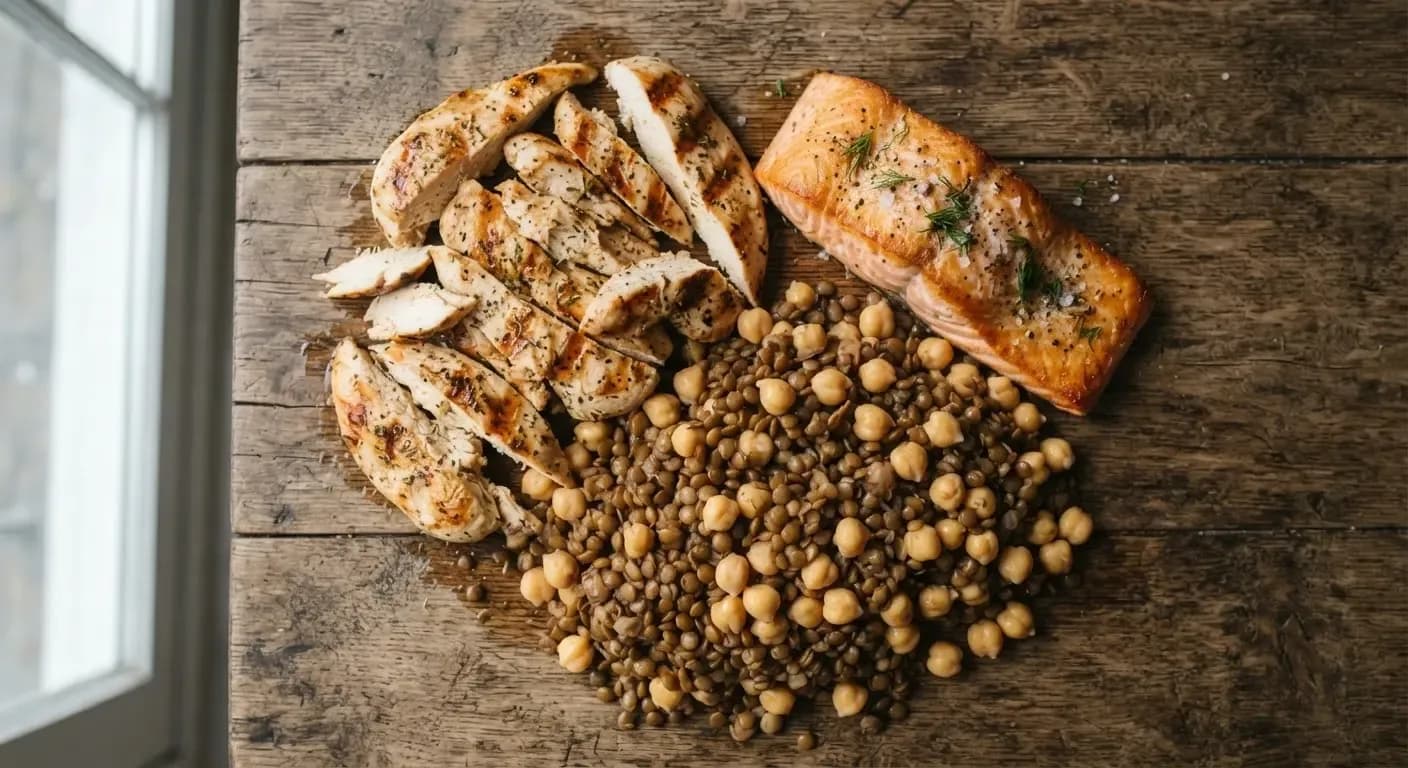
- Chicken Breast: A classic for a reason. It's incredibly lean and packs about 31 grams of protein per 100g serving.
- Lean Ground Beef: Great for hearty meals, a cooked 90/10 blend provides around 29 grams of protein per 100g. It's also a good source of iron.
- Salmon: Not just high in protein (about 25g per 100g), it's also loaded with healthy omega-3 fatty acids, which are great for your brain and heart.
- Eggs: A versatile and affordable choice. One large cooked egg has about 13 grams of complete protein.
- Greek Yogurt: Perfect for breakfast or snacks, non-fat Greek yogurt contains about 10 grams of protein per 100g, plus probiotics for gut health.
Plant-Based Proteins
- Tofu: Made from soybeans, firm tofu is a complete protein source offering around 17 grams per 100g. It’s fantastic at soaking up flavors in any dish.
- Lentils: A powerhouse of nutrients. Cooked lentils give you 9 grams of protein per 100g, along with a healthy dose of fiber to keep you full.
- Almonds: A perfect high-protein snack, almonds offer 21 grams of protein per 100g, plus healthy fats and vitamin E.
- Chickpeas: The star of hummus, chickpeas are versatile and packed with both protein and fiber.
- Quinoa: This is technically a seed, but we eat it like a grain. It's a rare plant-based food that is a complete protein, providing all essential amino acids. Cooked quinoa has about 4.4g of protein per 100g.
How to Choose the Right Protein for Your Goals
Not all protein sources are created equal, and the best one for you depends on your personal goals. Let's talk about a couple of key ideas: protein density and protein quality.
Protein density is about getting the most protein for the fewest calories. Foods like skinless chicken breast, shrimp, and egg whites are very dense, making them ideal for weight management. Protein quality refers to the amino acid profile. Animal proteins are typically 'complete,' meaning they have all nine essential amino acids your body can't make. Many plant proteins are 'incomplete,' but you can easily solve this by pairing them up—think rice and beans or hummus and pita bread. This combination creates a complete protein profile.
Food (100g) — Approx. Protein — Best For — Get a Custom Plan
Chicken Breast — 31g — Weight Loss / Muscle Gain — Personalize My Diet
Lentils (cooked) — 9g — Overall Health / Satiety — Personalize My Diet
Salmon — 25g — Muscle Gain / Heart Health — Personalize My Diet
Egg Whites — 11g — Weight Loss — Personalize My Diet
Simple Ways to Boost Your Daily Protein Intake
Getting more protein doesn't have to be complicated. Small changes throughout your day can add up quickly. Here are a few easy ideas to get you started.
- Supercharge Your Breakfast: Stir a scoop of Greek yogurt or protein powder into your morning oatmeal or smoothie.
- Snack Smarter: Instead of reaching for chips, try a handful of almonds, a hard-boiled egg, or a small cup of cottage cheese.
- Make Smart Swaps: Use legume-based pasta (made from chickpeas or lentils) instead of traditional wheat pasta for a big protein and fiber boost.
- Top It Off: Add a handful of nuts or seeds to your salads, or top your avocado toast with an egg.
Sample High-Protein Day
Wondering what this looks like in practice? Here's a simple example:
- Breakfast: Scrambled eggs with spinach and a slice of whole-wheat toast.
- Lunch: A large salad with grilled chicken breast, chickpeas, and a light vinaigrette.
- Snack: An apple with a spoonful of peanut butter or a small Greek yogurt.
- Dinner: Baked salmon with a side of quinoa and roasted broccoli.
Frequently Asked Questions (FAQ)
How much protein do I actually need per day?
The general recommendation for a sedentary adult is about 0.8 grams of protein per kilogram of body weight. However, your needs change based on your goals. For weight loss, aiming for 1.2 to 1.6 g/kg can help you feel full and preserve muscle. If you're looking to build muscle, that number increases to 1.6 to 2.2 g/kg. Source: PubMed, JISSN
Can you eat too much protein? Are there risks?
For most people with healthy kidneys, a high-protein diet is generally safe. The concern about kidney damage primarily applies to individuals with a pre-existing kidney condition. It's always best to focus on a balanced diet rather than just one nutrient. Source: NHS, WHO
Is plant-based protein as effective as animal protein for building muscle?
Yes, it can be! The key is variety and quantity. While some plant proteins are incomplete on their own, eating a wide range of sources (like legumes, nuts, seeds, and whole grains) throughout the day ensures you get all the essential amino acids. Studies show that as long as total protein intake is sufficient, plant-based diets can be just as effective for muscle growth.
Conclusion: Make Protein Work for You
Protein is a powerful tool for achieving your health goals, whether that's losing weight, building muscle, or simply feeling more energized. The most important things to remember are that variety is key, and your choices should match what you want to accomplish. This guide gives you the knowledge, but success comes from applying it consistently. If you're tired of guessing and want a clear path forward, a personalized plan can make all the difference.
Ready to stop planning and start seeing results? Get your personalized diet plan designed by experts and achieve your health goals with confidence. Start Your Custom Plan Now