Tricep Pushdown Guide: Rope vs. Bar for Maximum Arm Growth
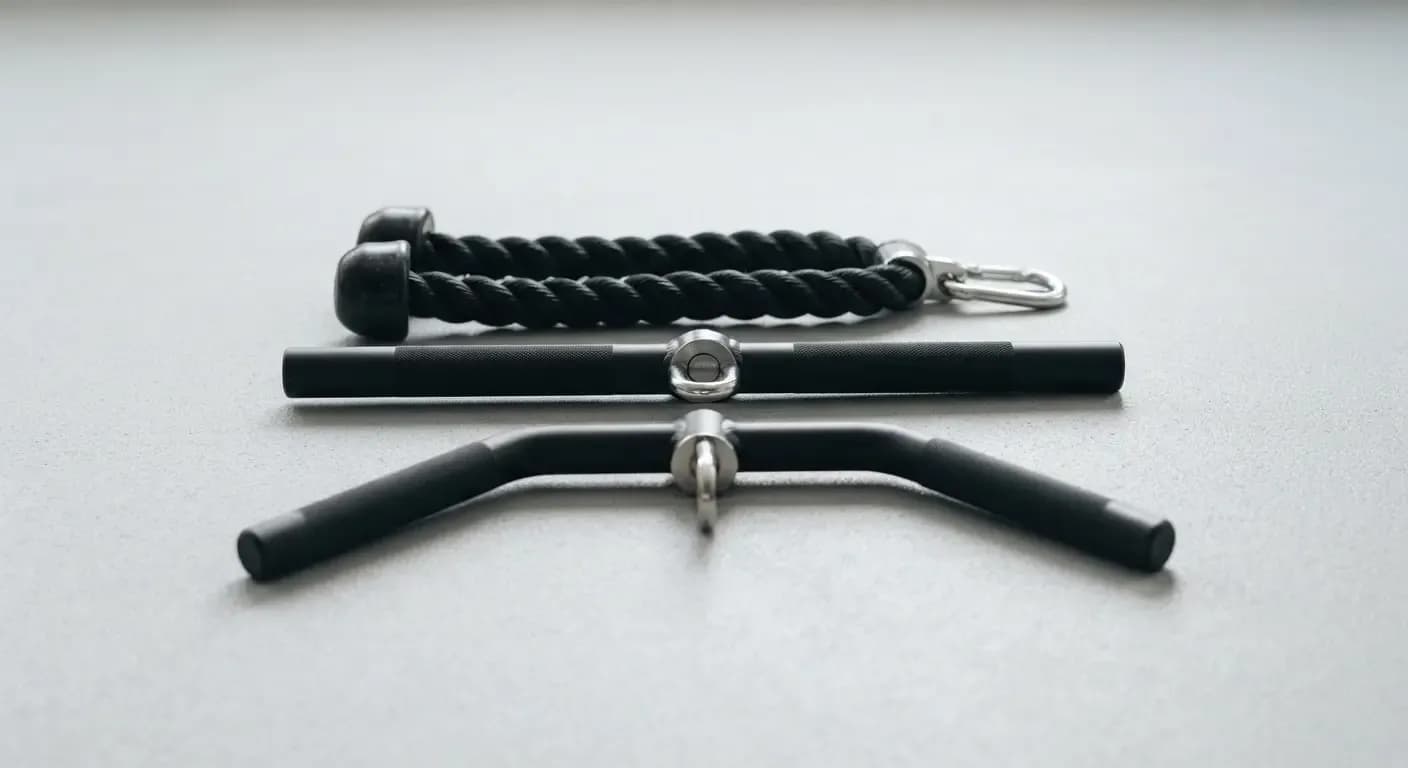
Struggling to build bigger, more defined triceps despite endless pushdowns? You're not alone. The secret isn't just lifting heavier; it's about choosing the right attachment for the job. This guide breaks down which tricep pushdown attachment builds the most muscle, from the rope to the bar, and even reveals how to master this exercise at home.
"It's not always about how much you lift, but *how* you lift. Your choice of handle could be the one thing holding back your arm growth."
The Ultimate Guide to the Tricep Pushdown Exercise
We all want impressive arms, and strong triceps are a huge part of that. The tricep pushdown is a fantastic exercise for this, but walking up to the cable machine can be confusing. You see a rope, a straight bar, and a V-bar. Which one should you grab? Does it even matter? Yes, it absolutely does.
Your tricep muscle has three parts, or 'heads': the long head, the lateral head, and the medial head. Different attachments and grips emphasize different heads. This guide will give you a clear comparison so you can choose the right tricep pushdown attachment for your specific goals, whether you're at the gym or working out at home.
Tricep Pushdown Attachment Comparison: At a Glance
Choosing the right tool can make all the difference. Here’s a quick breakdown of the most common tricep pushdown attachments to help you decide which one fits your workout.
Attachment — Primary Muscle Target — Best For — Wrist/Elbow Comfort
Rope — Lateral Head — Peak contraction and detail — High (allows natural wrist movement)
Straight Bar — All three heads (overall mass) — Lifting maximum weight and building strength — Low (can strain wrists for some)
V-Bar (Angled Bar) — Medial and Long Heads — A comfortable, all-purpose pushdown — Very High (neutral grip)
Now let's dive deeper into each of these cable pushdown variations to see how they work.
The Rope Attachment: Best for Peak Contraction & Detail
If you've ever seen someone with that impressive 'horseshoe' shape on their triceps, they were likely using a rope attachment. The rope's flexibility allows for a greater range of motion. At the bottom of the movement, you can pull the ends apart, which lets you rotate your wrists. This action specifically targets the lateral head of the tricep, which is responsible for that defined look.
Proper Rope Pushdown Form
Getting the form right is key to getting results and avoiding injury. Follow these steps:
- Set Up: Attach the rope to a high pulley and grab the ends with a neutral (palms facing each other) grip.
- Stance: Stand with your feet shoulder-width apart and lean your torso slightly forward. Keep your elbows tucked firmly at your sides. They should be your pivot point.
- Push Down: Exhale and push the rope down until your arms are fully extended. As you reach the bottom, pull the rope ends apart slightly.
- Squeeze: Pause for a second at the bottom and squeeze your triceps hard.
- Return Slowly: Inhale and let the rope come back up slowly and with control. Don't let your elbows flare out to the sides.
Pro-Tip: At the bottom of the movement, actively pull the rope ends apart. This small tweak maximizes the contraction in your triceps, helping to carve out that desired detail.
The Straight Bar: The King for Overall Mass & Strength
When your goal is to add serious size and strength to your arms, the straight bar is your best friend. Its rigid design allows you to lift the heaviest weight possible, which is essential for progressive overload—the primary driver of muscle growth. The fixed grip provides stability, letting you push maximum weight and target all three heads of the triceps effectively.
However, some people find the straight bar puts uncomfortable strain on their wrists. If you feel this, you can try adjusting your grip. A narrower grip can sometimes feel better than a wider, shoulder-width grip. Listen to your body and find what works for you.
The V-Bar (or Angled Bar): The Comfortable Compromise
The V-bar is like a perfect mix of the rope and the straight bar. It offers a semi-pronated, or neutral, grip where your palms face each other at a slight angle. For many people, this is the most natural and comfortable position for their wrists and elbows.
This makes the V-bar a fantastic choice for beginners who are just learning the tricep pushdown form or for anyone who experiences joint pain with a straight bar. While its range of motion is a bit more limited than the rope's, it's still a very effective tool for overall tricep development and a great option to have in your routine.
How to Do a Perfect Tricep Pushdown at Home
No gym? No problem. You can still get a great tricep workout at home. The best way to replicate the cable machine movement is by using high-quality resistance bands with a door anchor. This setup allows you to mimic the downward pulling motion and keep constant tension on the muscle.
Here’s how to set it up:
- Secure the Anchor: Place the door anchor at the top of a sturdy door and close it securely.
- Attach the Band: Loop your resistance band through the anchor. You can use handles or just grab the band itself.
- Find Your Stance: Stand facing away from the door and take a step forward to create tension. Lean your torso slightly forward.
- Perform the Pushdown: Keeping your elbows tucked in at your sides, press down until your arms are fully extended. Squeeze your triceps at the bottom, then slowly return to the start.
This is one of the most effective cable pushdown variations you can do without leaving the house. You can adjust the difficulty by using different bands or changing your distance from the door.
Our Recommendation: Which Attachment Should You Use?
The 'best' attachment really depends on you and your goals. Here’s our advice based on different training profiles:
- For Maximum Growth & Mass: We recommend cycling between attachments. Use the straight bar on your heavy days to push for strength and overload. On other days, use the rope attachment to focus on peak contraction and hitting the muscle from a different angle.
- For Beginners or Joint Pain: Start with the V-bar. Its neutral grip is generally more comfortable on the wrists and elbows, allowing you to master the tricep pushdown form without discomfort.
- For Home Workouts: A good set of resistance bands with a door anchor is your best option. It’s a versatile and effective way to build your triceps anywhere, anytime.
Frequently Asked Questions (FAQ) about Tricep Pushdowns
Should I go to full lockout on every rep?
Yes, for the most part. Extending your arm to a full 'lockout' ensures you are achieving a full contraction of the tricep muscle. However, if you feel pain in your elbow joint, it's okay to stop just short of a harsh lockout. Focus on squeezing the muscle, not jamming the joint.
What's the best rep range for tricep growth?
For muscle growth (hypertrophy), a rep range of 8-15 reps per set is generally effective. You should be using a weight that makes the last few reps challenging while still maintaining proper form.
How often should I train triceps?
Training triceps 1-2 times per week is plenty for most people. Your triceps also get worked during pressing movements like the bench press or on your shoulder exercise day, so remember to account for that indirect volume.
Which head of the tricep makes the arm look biggest?
All three heads (long, lateral, and medial) contribute to overall size. However, the long head, which runs down the back of your arm, makes up the most mass. The lateral head is what creates the visible 'horseshoe' shape on the side of your arm.
The Takeaway: Build Your Best Triceps, Anywhere
So, is the rope or the bar better for the tricep pushdown exercise? The answer is: it depends on your goal. The straight bar is king for building raw strength and mass, while the rope excels at creating definition and a strong peak contraction. The V-bar offers a comfortable middle ground. The most effective routine will likely include a variety of these attachments. By understanding the purpose of each tool, you can stop guessing and start building your best triceps, whether you're at the gym or training at home.